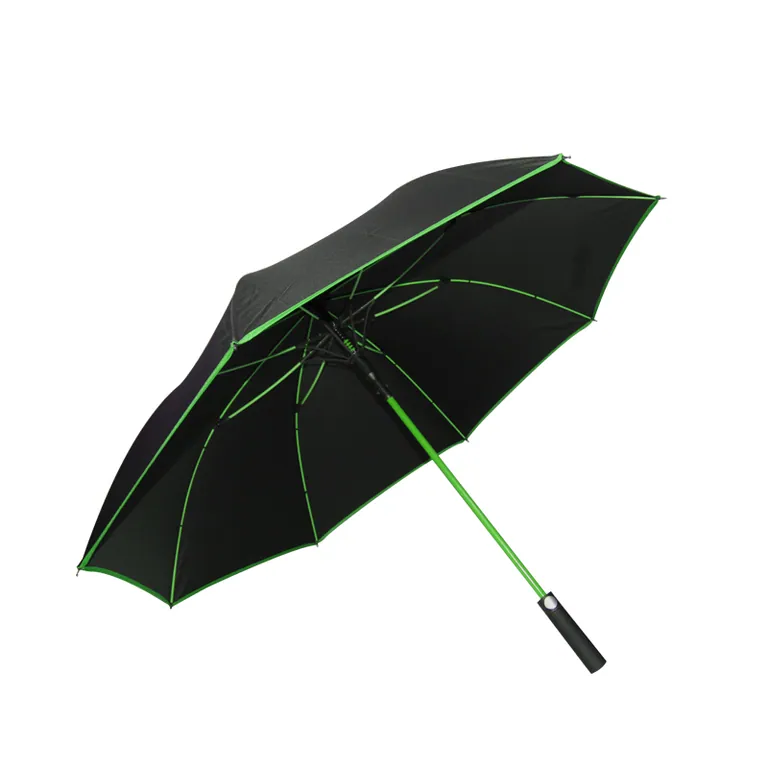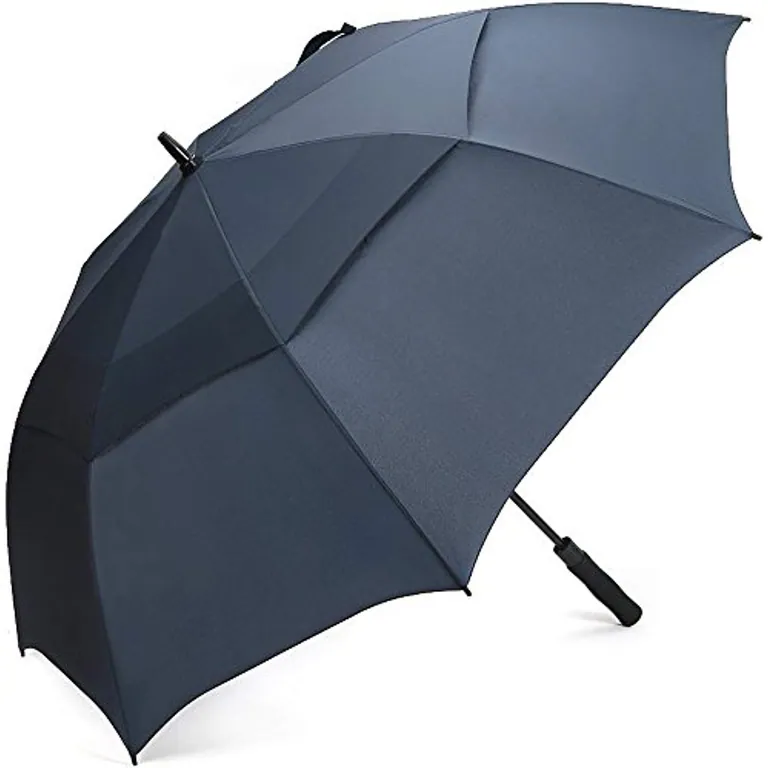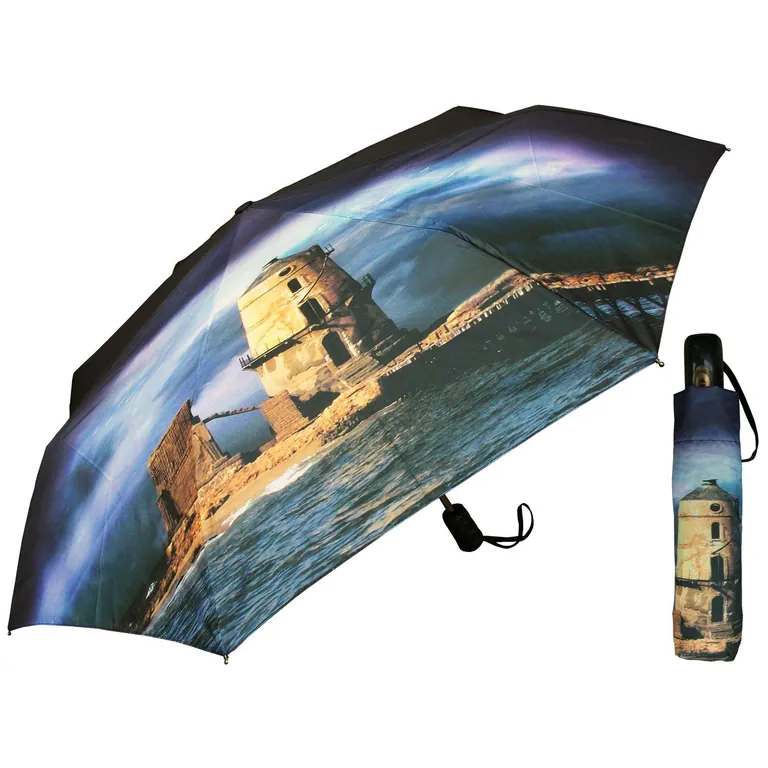
Pongee, Polyester, RPET or Nylon: Umbrella Fabrics Compared
How pongee, polyester, RPET and nylon umbrella fabrics compare on feel, water, sunlight and cost, what 190T and 210T mean, and how to specify fabric.
بقلم فريق Lotus Umbrellaمدة القراءة: 7 دقائق
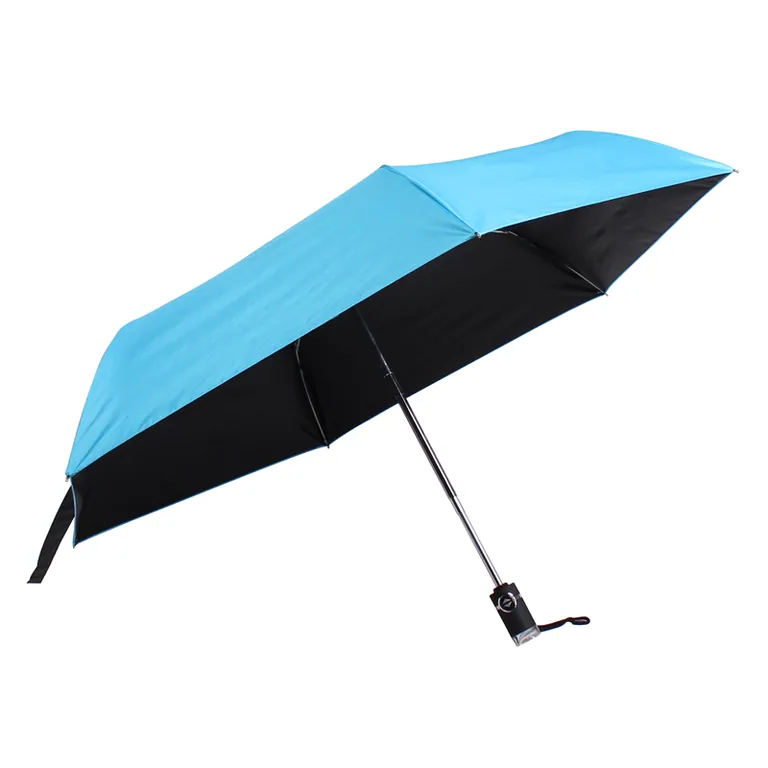
Pongee is a densely woven polyester fabric with a soft, matt finish, and 190T or 210T pongee is a common choice for mid-range and premium umbrellas. Standard polyester is cheaper and slightly shinier, RPET is polyester made from recycled bottles that performs much like virgin polyester, and nylon is light and strong but costs more and stands up less well to sunlight. For most branded umbrellas, pongee is a safe default.
What 190T and 210T mean
The number followed by "T" is a thread count: roughly the total number of warp and weft threads in one square inch of fabric. A higher count means a denser weave, which usually gives a smoother surface, better water shedding and sharper printing.
Thread count is not the whole story, because yarn thickness matters too. Two 190T fabrics woven from different yarns can differ noticeably in weight and feel. When you compare quotations, ask for the fabric weight in grams per square metre (g/m²) and the yarn size in denier as well as the T number.
- 170T: a lighter, more open polyester, often used for low-cost promotional umbrellas.
- 190T: the standard grade for many umbrellas, in polyester or pongee.
- 210T and above: a denser fabric with a smoother surface, often chosen for premium and UV-coated umbrellas.
Pongee
In the umbrella trade, pongee means a polyester fabric woven from fine filament yarns into a dense, soft, matt cloth that feels closer to cotton than ordinary polyester does. With a water-repellent finish, rain beads and runs off quickly, and the canopy dries fast.
- Feel and look: soft and matt, with a quality appearance that suits branded products.
- Water: sheds water well and dries quickly.
- Printing: the smooth, dense surface takes screen, heat-transfer and digital printing well.
- Cost: more than basic polyester, and usually less than nylon.
190T pongee is one of the most common canopy fabrics in the Lotus catalogue, used on folding, straight, golf and beach umbrellas.
Polyester
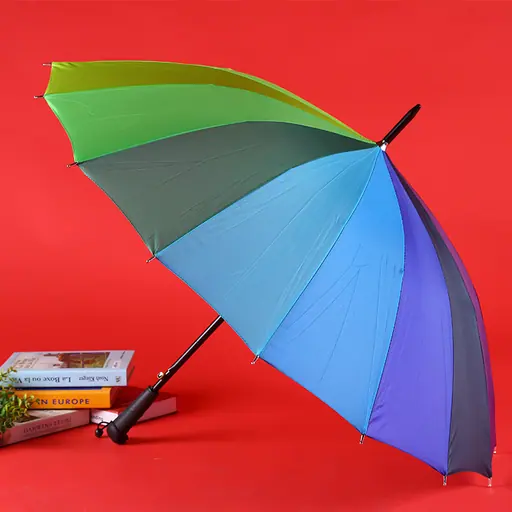
Umbrellas listed simply as "polyester" are usually made from plain-woven polyester taffeta. It is smooth and slightly glossy, with a crisper feel than pongee. It is light, dries quickly, takes print well and costs less, which makes it popular for promotional umbrellas and multi-colour canopies. This 16-rib rainbow stick umbrella, for example, uses 170T polyester.
The trade-offs are a thinner feel and, at lower thread counts, a more open weave that relies more heavily on its water-repellent finish.
RPET (recycled polyester)
RPET is polyester made from recycled PET, mostly post-consumer drinks bottles that are cleaned, melted and spun into new yarn. It can be woven into pongee-style or taffeta-style fabric, and in use it behaves much like virgin polyester: it sheds water, takes print and dries quickly. What sets an RPET programme apart is the paperwork around it.
- Documentation: recycled-content claims should be backed by certification under a recognised scheme, such as the Global Recycled Standard (GRS), with transaction certificates that trace the material to your order.
- Claims: environmental claims are regulated in the EU, the UK and the US, so make sure the wording on your product and packaging matches what you can document. Our guide to EU and US compliance for imported umbrellas covers the wider rules.
- Cost and timing: recycled yarn can cost more than virgin polyester, and some colours or constructions may involve longer lead times or higher fabric minimums.
- Scope: the canopy is only part of the umbrella. Frames, handles and packaging may use other materials, so be precise about which parts are recycled.
If recycled content matters for your programme, mention it in your first inquiry, so that fabric availability, minimums and documentation can be confirmed before sampling.
Nylon
Nylon has a higher strength-to-weight ratio than polyester and a soft, smooth handle, so it can make a light canopy feel premium. It also has drawbacks for umbrellas. It absorbs more water than polyester, so it can sag slightly when wet and dries more slowly, and it degrades faster in strong sunlight, which affects colour and fabric strength outdoors. It usually costs more as well.
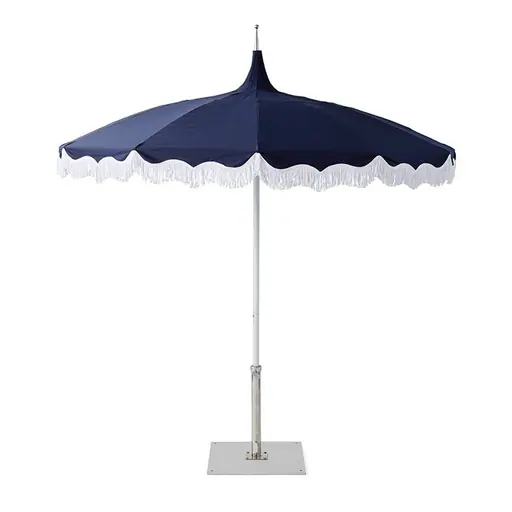
Nylon is used where low weight matters most, such as ultra-light travel umbrellas, and for some outdoor products. This double-layer pagoda beach umbrella in our catalogue uses 210T nylon.
Umbrella fabrics compared
| Fabric | Feel and look | Water | Sunlight | Relative cost | Typical use |
|---|---|---|---|---|---|
| Pongee | Soft, matt | Sheds water well, dries fast | Good, especially with a UV coating | Medium | Branded, retail and golf umbrellas |
| Polyester (taffeta) | Smooth, slightly glossy | Good, dries fast | Good | Low | Promotional and multi-colour umbrellas |
| RPET | Similar to polyester or pongee | Similar to virgin polyester | Similar to virgin polyester | Medium to high | Programmes with recycled-content goals |
| Nylon | Soft, smooth, light | Absorbs more water, dries more slowly | Weaker in strong sunlight | High | Ultra-light and some outdoor products |
Coatings, finishes and other canopy materials
- Water-repellent finish: applied to most umbrella fabrics so that rain beads up and runs off. If your market restricts PFAS chemicals, specify a fluorine-free finish and ask for test reports.
- Black UV coating: a coating on the underside of the canopy that blocks light and improves sun protection. It adds a little weight and makes the inside of the canopy dark.
- Silver or titanium coating: a reflective coating that helps keep the shade cooler. Our guide to UV protection and UPF 50+ explains how ratings work.
- Other materials: transparent umbrellas use POE or PVC, heavier oxford fabric suits beach and garden umbrellas, and cotton and lace appear on fashion and wedding umbrellas.
Colour matching and dye lots
Stock fabric colours are the quickest and cheapest route. A custom colour means dyeing fabric for your order, so it is worth asking for a lab dip, a small dyed swatch, to approve against your Pantone reference before the bulk fabric is dyed. Colours can vary slightly from one dye lot to the next, so for repeat orders, keep an approved swatch or sample and ask for new production to be matched to it.
Checking fabric on a sample
- Pour water over the open canopy and watch whether it beads and runs off or soaks in.
- Look at the canopy against the light to judge how dense the weave is.
- Rub the surface and check printed areas for colour transfer.
- Inspect the stitching where panels meet and where the canopy is fixed to the rib tips.
- If the canopy has a UV coating, check that it is even, with no thin patches or cracks.
How to specify fabric in your inquiry
- Fabric type: pongee, polyester, RPET or nylon.
- Thread count, plus weight in g/m² if you have a target.
- Colour reference, such as a Pantone number, and whether a stock colour is acceptable.
- Coating and finish: none, black UV or silver coating, and the type of water-repellent finish.
- Print method and print positions.
- Any test reports or documentation your market requires.
Common fabrics in the Lotus catalogue include 190T pongee, polyester, oxford, cotton, nylon and transparent POE or PVC, and custom fabrics and colours can be discussed for OEM orders. Waterproofing and UV coating are among the points checked in the final inspection before packing.
Browse our automatic folding umbrellas to compare pongee and coated models, then send your fabric preferences, size and quantity through the inquiry form and ask for a sample in your chosen fabric.
الأسئلة الشائعة
What is pongee umbrella fabric?
It is a polyester fabric woven densely from fine filament yarns, giving a soft, matt cloth that sheds rain and dries quickly. It is widely used for branded and retail umbrellas.
Is 210T fabric better than 190T?
A 210T fabric has more threads per square inch, so it is usually denser and smoother. Yarn size also affects quality, so compare fabric weight in g/m² as well as the T number.
Does RPET perform differently from normal polyester?
In everyday use it behaves much like virgin polyester. The main differences are cost, availability and the need for recycled-content documentation to support any claims.
Why do most umbrellas use polyester rather than nylon?
Polyester resists sunlight better, absorbs less water and costs less. Nylon is lighter for its strength, so it tends to be kept for ultra-light designs and some outdoor products.