Fibreglass, Steel or Aluminium: Choosing an Umbrella Frame
How fibreglass, steel and aluminium umbrella frames compare on weight, wind behaviour, corrosion and cost, and which suits golf, promotional and travel umbrellas.
بقلم فريق Lotus Umbrellaمدة القراءة: 6 دقائق
Choose fibreglass ribs when an umbrella has to cope with wind, because fibreglass flexes and springs back where steel would bend and stay bent. Steel suits economical, rigid frames for budget and promotional umbrellas, and aluminium is the choice when low weight matters most, as in compact and travel models. Many good umbrellas combine materials, for example a steel or aluminium shaft with fibreglass ribs.
The parts of an umbrella frame
A frame is made of several parts, and each can use a different material:
- Shaft: the central pole, in one piece on a straight umbrella and in telescopic sections on a folding one.
- Ribs: the long arms that hold the canopy. They carry most of the wind load.
- Stretchers: the short arms that link each rib to the runner.
- Runner and top notch: the sliding hub that opens the frame and the fixed hub at the top where the ribs meet.
- Springs, catches, tips and handle: the small parts that make the umbrella open, lock and close.
Spec sheets usually describe a frame by its shaft and rib materials, such as "steel shaft, fibreglass ribs". Because the ribs take the strain in a gust, rib material has the biggest influence on how an umbrella behaves in wind.
Fibreglass
Fibreglass, spelled fiberglass in American English and on many spec sheets, is glass fibre bound in resin. Fibreglass umbrella ribs are usually slim solid rods or profiled strips, joined to metal or plastic connectors at the top notch, at the stretcher joint and at the tip.
- Strengths: it can flex much further than steel before it is damaged, so a gust that would kink a steel rib usually just bends a fibreglass one, which then returns to shape. It does not rust, it is light, and it can be coloured.
- Weaknesses: it costs more than basic steel, and if it is overloaded it can split rather than bend, so rib ends should be capped and the surface coated. The connectors and rivets become the weak points, so their quality matters as much as the rods themselves.
Fibreglass is the usual choice for golf umbrellas, windproof folding umbrellas and other large canopies. Some straight umbrellas use a fibreglass shaft as well. On a sample, check that the ribs are straight and evenly spaced, that the coating is smooth with no exposed fibres, and that every tip is secure. On the spec sheet, ask for rib thickness in millimetres, because thicker rods are stiffer and stronger.
Steel
Steel is strong, stiff and inexpensive. It remains common in promotional umbrellas and in shafts, including on many umbrellas with fibreglass ribs.
- Strengths: it holds its shape, it is strong in slim sections, it is easy to form into ribs and stretchers, and it keeps costs down.
- Weaknesses: it is the heaviest of the three, it stays bent once it has been pushed past its limit, and it rusts where the coating is thin or scratched, especially around rivets and joints.
Steel parts are protected by chrome plating, zinc coating, or black and coloured paint or powder coatings, sometimes listed as a "baking finish". On spec sheets from Chinese factories, "iron" usually refers to an inexpensive mild-steel tube, so ask what is meant and how it is finished. If your umbrellas will be sold in humid or coastal markets, consider specifying a salt spray test for the frame finish.
Aluminium
Aluminium alloy weighs roughly a third as much as steel for the same volume and forms a protective oxide layer, so it resists rust. It is less stiff than steel, so aluminium parts are usually made with thicker walls or larger sections, and they bend more readily under heavy loads.
- Strengths: low weight, good corrosion resistance and a clean look. It can be anodised in colours to match a brand.
- Weaknesses: it costs more than basic steel, it can dent, and on its own it is not the strongest option for large canopies in strong wind.
Aluminium works best as the shaft of compact, travel and light straight umbrellas, usually combined with fibreglass ribs.
Wood and mixed frames
Wood is used for the shafts and handles of classic straight umbrellas and for the poles of beach umbrellas. It looks premium but is heavier, and it needs a good varnish to cope with rain. Wooden-shaft umbrellas usually pair the shaft with metal or fibreglass ribs.
Mixed frames are normal. A steel shaft with fibreglass ribs is a common combination for windproof umbrellas, an aluminium shaft with fibreglass ribs saves weight in travel umbrellas, and an all-steel frame keeps the price down on simple promotional models.
Fibreglass, steel and aluminium compared
| Factor | Fibreglass | Steel | Aluminium |
|---|---|---|---|
| Weight | Light | Heaviest | Light |
| Behaviour in gusts | Flexes and springs back | Rigid; can bend permanently | Can bend under heavy loads |
| Corrosion | Does not rust | Rusts if the coating is damaged | Resists rust |
| Relative cost | Medium to high | Low | Medium to high |
| Typical use | Golf, windproof and large canopies | Budget and promotional umbrellas, shafts | Compact and travel umbrellas, light shafts |
Matching the frame to the job
- High-volume giveaways: a steel frame, or a steel shaft with fibreglass ribs to balance cost and durability.
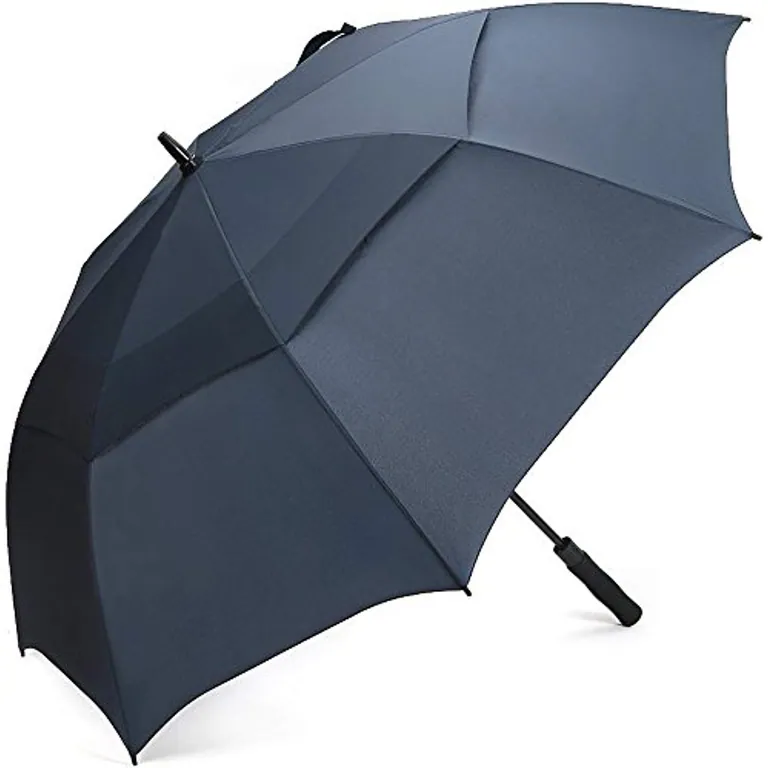
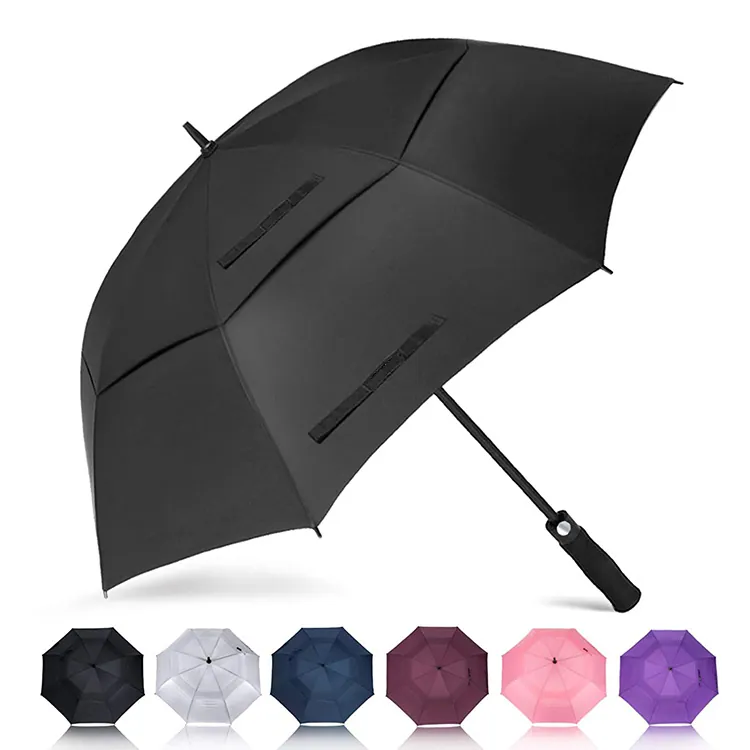
- Golf and other large canopies: fibreglass ribs, often with a vented double canopy. Our guide to golf umbrella sizes explains why wind load rises with canopy size.
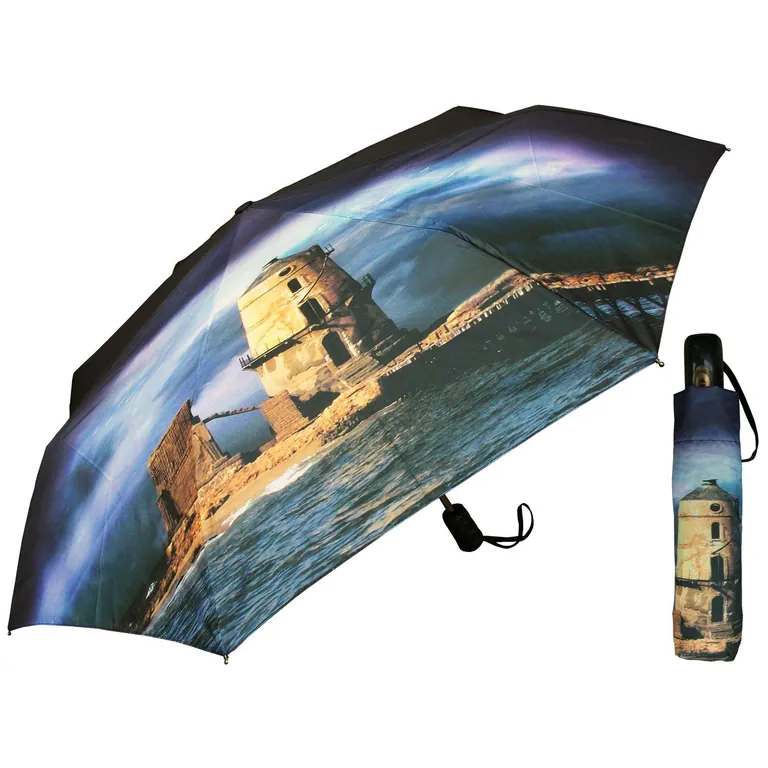
- Compact and travel umbrellas: fibreglass ribs on a light shaft, often aluminium. See this three-fold umbrella with a fibreglass frame for an example.
- Premium and classic ranges: a wooden shaft and handle with fibreglass or steel ribs.
- Humid or coastal markets: fibreglass and aluminium, or steel with a well-tested finish.
What to check on a sample
- Weigh the umbrella and compare it with the spec sheet.
- Open and close it repeatedly. The runner should slide smoothly, the springs and catches should work every time, and the ribs should sit evenly.
- Look closely at rivets and joints, where most frames fail first.
- Check coatings for scratches or bare metal.
- Ask for the shaft diameter, rib material and thickness, number of ribs, stretcher material, finish and weight in writing.
If wind performance is part of your claim, ask how it was tested. Our article on windproof umbrellas and wind testing covers what to look for.
Frames at Lotus
Lotus builds frames in steel, aluminium alloy, fibreglass, iron and wood, for folding and straight umbrellas with 8, 10, 12, 16 or 24 ribs and rib lengths commonly between 17 and 30 inches. During production, inspectors check frame tension and the opening and closing mechanism by random sampling, and the final inspection covers wind resistance. An independent laboratory, RTS, carried out a level 8 wind resistance test in February 2026; more on our quality page.
Browse our large and golf umbrellas for fibreglass, steel and aluminium options, or send your preferred frame, size and quantity through the inquiry form and ask for a sample to test.
الأسئلة الشائعة
Are fibreglass umbrella ribs better than steel?
For wind, usually yes: fibreglass flexes and recovers where steel can bend permanently, and it does not rust. Steel remains a sound, lower-cost choice for simple promotional umbrellas used mostly in light weather.
Is aluminium strong enough for an umbrella frame?
Yes, for shafts and compact frames, where its low weight is the main benefit. For large canopies in strong wind, aluminium is usually paired with fibreglass ribs rather than used on its own.
What does 'iron' mean on an umbrella spec sheet?
On spec sheets from Chinese factories it usually refers to a basic mild-steel tube. Ask the supplier to confirm the material and the finish, since the finish decides how well it resists rust.
Which frame is best for golf umbrellas?
Golf umbrellas generally use fibreglass ribs, often on a fibreglass or steel shaft, because the large canopy puts heavy loads on the frame in gusts. A vented double canopy can help as well.