UV Umbrellas: How UPF 50+ Coatings Work
What UPF 50+ means, how silver and black coatings block UV, how fabrics are tested, and why every claim needs a report for the exact fabric you order.
โดยทีมงาน Lotus Umbrellaอ่าน 6 นาที
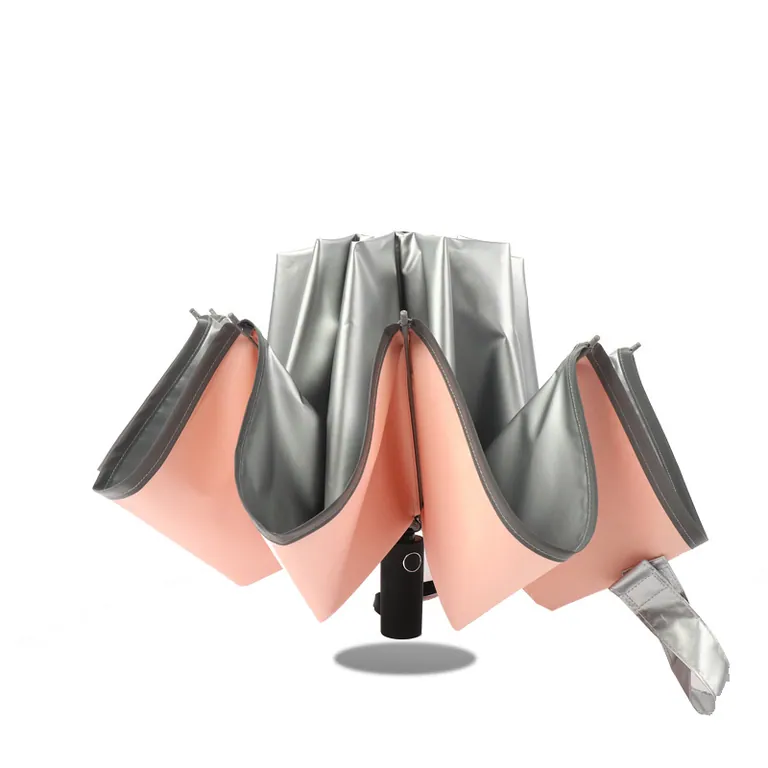
A UPF 50+ umbrella has a canopy fabric that lets through no more than about one-fiftieth, or 2%, of the sun's sunburn-causing UV radiation, usually because the fabric carries a silver or black coating that reflects or absorbs it. The rating comes from a laboratory test on the fabric itself, so a UPF claim is only as reliable as the test report for that exact fabric, coating and colour.
UPF and SPF are different measurements
SPF, the sun protection factor, applies to sunscreens. It is measured on human skin by comparing how long protected and unprotected skin take to redden, so it mainly reflects protection against UVB, the rays that cause sunburn. Many markets rate a sunscreen's UVA protection separately.
UPF, the ultraviolet protection factor, applies to fabrics. A laboratory places a fabric sample in a spectrophotometer and measures how much UV passes through it across both the UVA and UVB ranges. Each wavelength is weighted by how strongly it burns skin, and the result is expressed as a ratio: a UPF 50 fabric lets through roughly one-fiftieth of the effective UV.
| UPF rating | Effective UV transmitted | Effective UV blocked |
|---|---|---|
| UPF 15 | About 6.7% | About 93% |
| UPF 30 | About 3.3% | About 97% |
| UPF 50 | About 2% | About 98% |
The step from UPF 30 to UPF 50 looks small in percentage terms, but it cuts the UV getting through by around 40%.
How umbrella fabrics block UV
The base fabric does part of the work. Polyester fabrics, including pongee, absorb some UV, and dense weaves and dark colours block more than thin, pale ones. An uncoated, light-coloured canopy can therefore let through considerably more UV than its appearance suggests. Our guide to pongee, polyester, RPET and nylon compares the base fabrics.
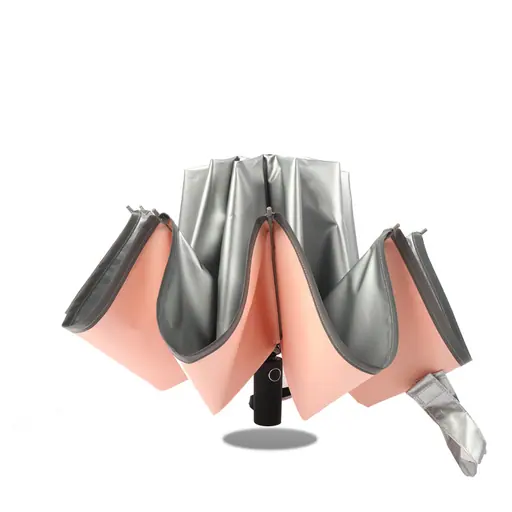
On sun umbrellas, most of the protection comes from a coating applied to one face of the canopy, often the inside, so the outer face keeps its printed colour.
Silver coatings
A silver coating is a layer of metallic pigment in a binder. Chinese suppliers often call it "silver glue", and "titanium silver" is a common trade name for one variant. Silver reflects visible light and heat as well as UV, so the shade underneath feels cooler, which suits parasols and golf umbrellas used in strong sun.
Black coatings
Black coatings, often sold as "black vinyl" or "black UV" coatings and called "black glue" by Chinese suppliers, are dense, opaque layers that absorb UV and most visible light. They give deep shade, and on the inside of a canopy they absorb light bounced up from pavements, sand and water rather than reflecting it back towards the user. The coating adds a little weight and stiffness to the fabric, which is worth checking on the smallest folding models.
Coating durability
A coating only protects while it is intact. Repeated folding, abrasion and heat can crack or peel a weak coating, and compact umbrellas with five or six folds put the most strain on it. When you assess samples, open and fold them many times, then look along the fold lines for cracks, check that the coating is not tacky, and note any strong chemical odour. If the coating is PVC-based, ask what plasticisers it contains, because several phthalates are restricted under EU REACH and some require warnings under California's Proposition 65.
How fabrics are tested for UPF
Most UPF tests follow the same principle. A small fabric specimen is placed in a spectrophotometer, which measures the UV transmitted across roughly 290–400 nanometres. The readings are weighted for the sun's spectrum and the skin's sensitivity, and a UPF value is calculated, usually alongside the share of UVA that passes through. Several specimens are tested, and the rating is calculated conservatively rather than taken from the best result.
The common reference methods are:
- AS/NZS 4399, the Australian and New Zealand standard for evaluating and classifying sun protective clothing, which labels its highest category UPF 50+.
- EN 13758-1, the European test method for apparel fabrics. Its companion, EN 13758-2, sets the classification and labels qualifying clothing "UPF 40+".
- AATCC 183, the US test method for UV transmittance through fabrics, which is often used with ASTM labelling guidance that also tops out at UPF 50+.
These standards were written for clothing, but their test methods are widely applied to umbrella canopies. Because sample preparation, specimen numbers and rounding differ, a result under one standard does not automatically translate into a label under another, so name the standard alongside any rating you print.
Why a claim needs a report for your exact fabric
A UPF result describes the fabric that was tested: the base cloth, its density (for example 190T or 210T), the colour, and the type and weight of coating. Change any of these and the result can change. A report for black pongee with a silver coating does not cover the same umbrella in white without a coating, nor a printed fabric finished differently.
Before you put "UPF 50+" on a swing tag or a product listing, check that:
- the report names the fabric, colour and coating used in your order
- it states the standard, the laboratory and the test date
- the bulk fabric matches the tested fabric, which you can confirm on large programmes by testing samples taken from production
- your wording matches the result, avoiding claims such as "blocks 100% of UV" that a UPF test does not support
It also helps to be clear about what UPF does not cover. An umbrella shades the user from direct sun, but UV scattered by the sky and reflected from sand, water and pavements still reaches the skin, so even a UPF 50+ umbrella is one part of sun protection rather than the whole of it.
UV umbrellas from Lotus
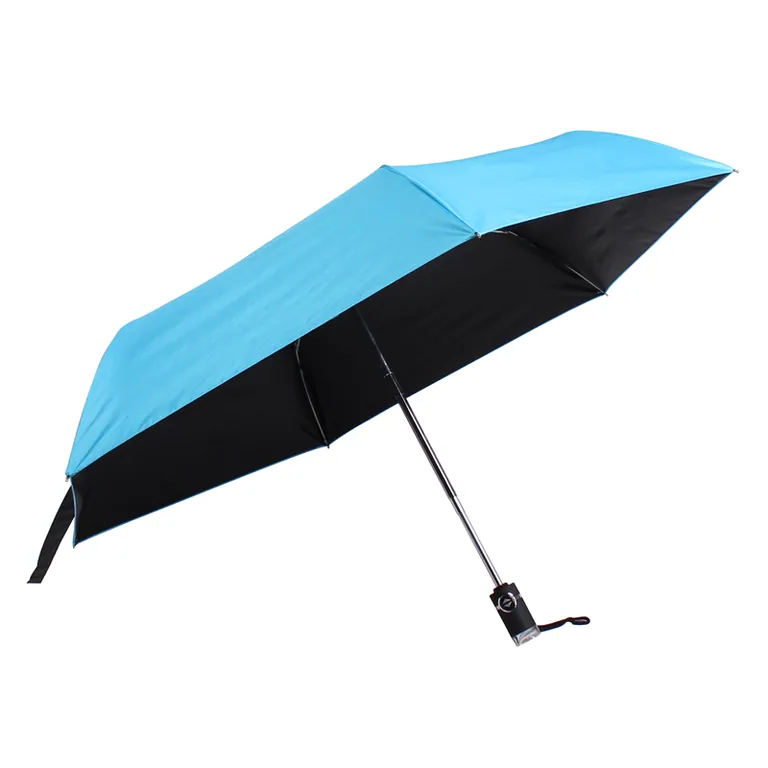
The Lotus catalogue includes sun umbrellas with silver and black coatings, from pocket five-fold models to golf sizes, such as the 19-inch five-fold titanium silver-coated umbrella. You can browse more compact sun umbrellas among our manual folding umbrellas. UV coating is one of the points checked at final inspection, together with waterproofing, wind resistance and finish, as described on our quality page. If you need a UPF report for a particular fabric and colour, ask the sales team whether one already exists or whether a new test should be arranged before bulk production.
To discuss coatings, colours and printing for a sun umbrella range, send an inquiry. The sales team replies within 24 hours, and samples typically take 3–7 days, so you can compare silver and black coatings side by side before you decide.
คำถามที่พบบ่อย
Is a black coating better than a silver coating for UV protection?
Both can reach high UPF results. Silver reflects more heat, while black absorbs light and gives deeper shade, so the choice is often about comfort and look; the test report for the finished fabric confirms the rating.
Does the UV protection of an umbrella wear off?
The protection lasts as long as the coating stays intact. Heavy folding and abrasion can crack a weak coating over time, so check samples after repeated opening and folding before you approve bulk production.
Can a white or pastel umbrella be UPF 50+?
Yes, if it has a suitable coating, because the coating usually provides most of the protection rather than the outer colour. The finished fabric still needs to be tested to confirm the result.
Which UPF standard should our test report follow?
Use the standard your customers and market recognise, for example AS/NZS 4399 for Australia and New Zealand, EN 13758-1 in Europe or AATCC 183 in the US. Print the standard next to the rating so the claim is clear.